Share Goal CC: HOUSING VARIETY on FacebookShare Goal CC: HOUSING VARIETY on X (formerly Twitter)Share Goal CC: HOUSING VARIETY on LinkedinEmail Goal CC: HOUSING VARIETY link
If you are viewing this website on a mobile device, please use full-screen mode (landscape).
Enable a wide range of housing types, densities, and prices that maintain Oro Valley’s quality architectural aesthetics and site designs, community character, and value of home ownership.
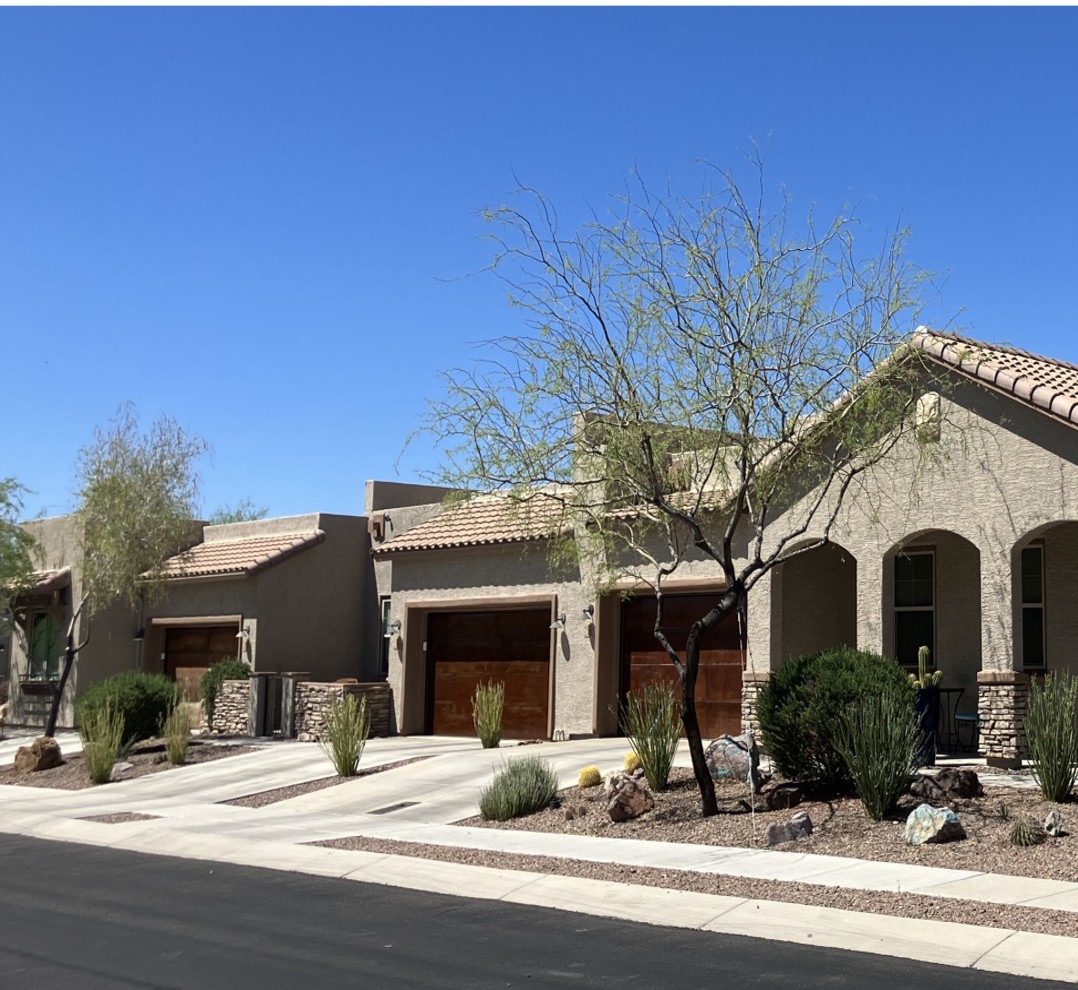
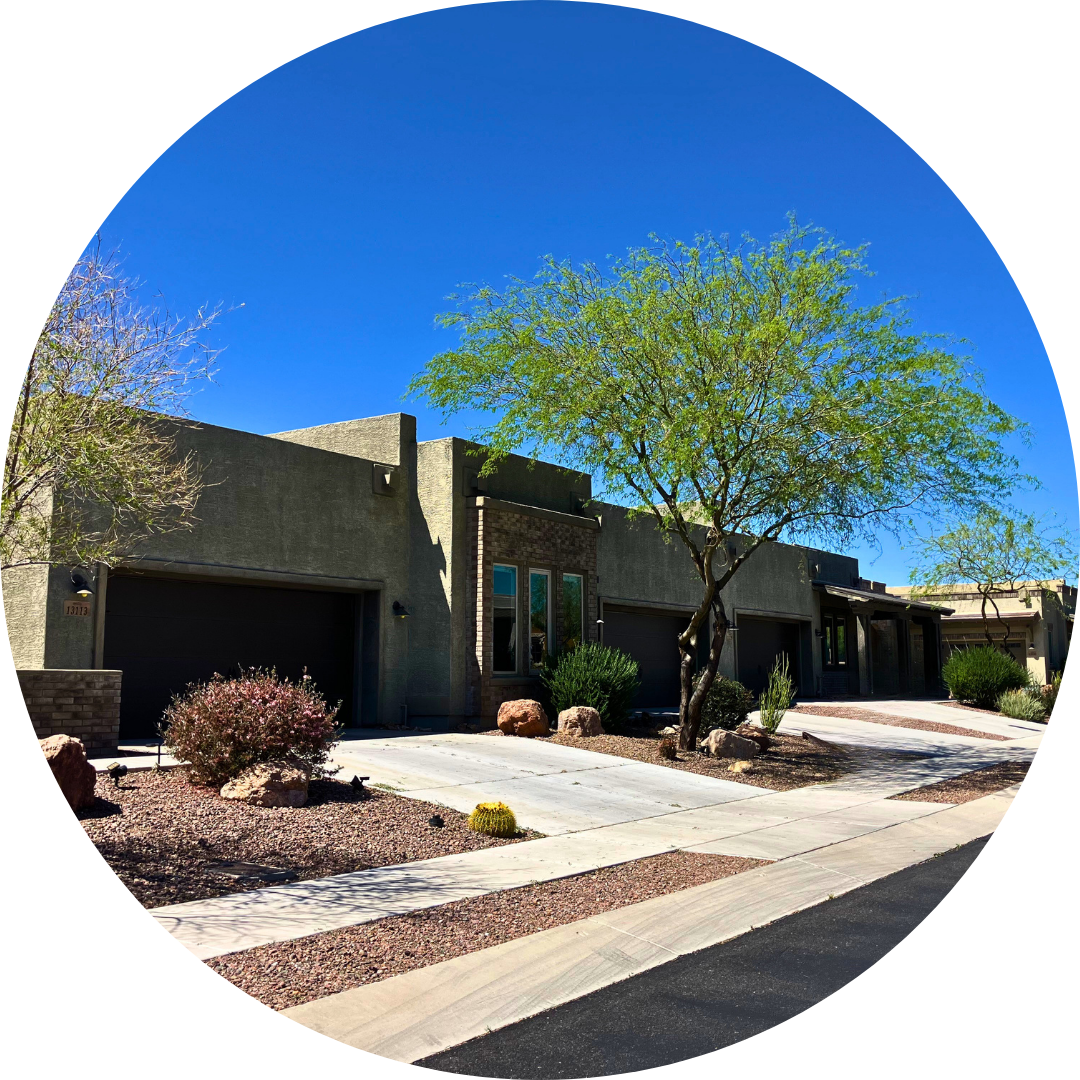
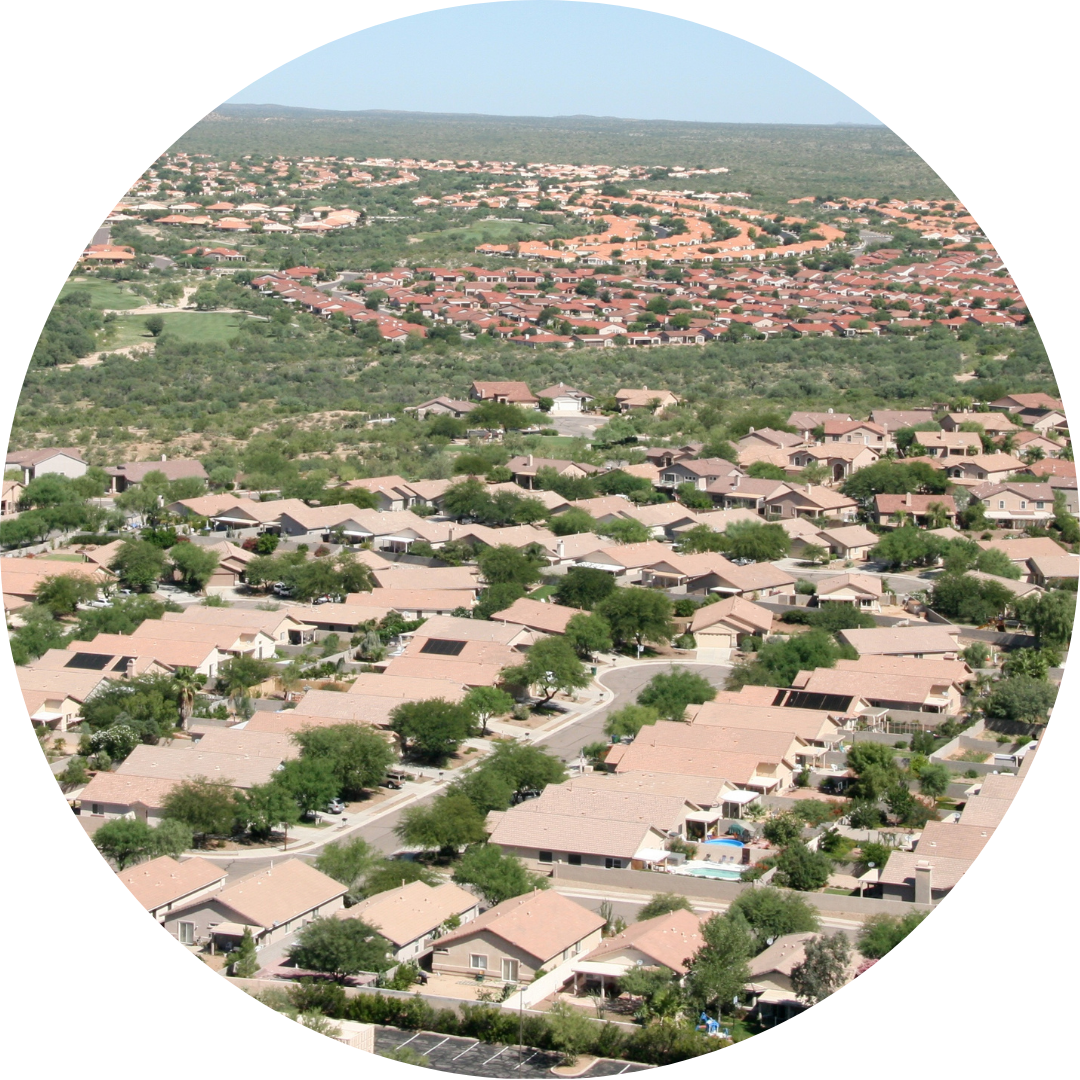
Picture is an example of duplex/multi-family homes in Rancho Vistoso.
Goal.
The desired result or the envisioned future, answering the question “What do we strive for?”
Policy.
The direction or path, answering the question “How are we achieving our goals?”
Action.
The specific and measurable steps, answering the question “What steps do we need to take to achieve our goals?”
Each action includes a timeframe for completion and assigns a responsible department within the Town of Oro Valley to lead its implementation. This information is meant to be somewhat flexible, as priorities for each action may shift based on new guidance and resources. More information about the anticipated timeframe is provided at the bottom of this page.
The following is a list of policies and actions that support the goal and long-term vision for the community.
Policy CC.1. Support a variety of housing types with varying price points for seniors, young adults, families, and a broad range of workers who support Oro Valley businesses.
The following actions will be implemented on an ongoing basis:
Departments
253
Review development proposals for various housing types to ensure:
Quality architectural aesthetic and site design.
Compatibility with the surrounding area.
Safety.
Community and Economic Development (CED)
The following actions are anticipated to be completed in 1-2 years:
Department
254
Continue to reduce zoning barriers to develop diverse housing types, including attached dwelling units (like townhomes, patio homes, duplexes, etc.) and accessory dwelling units, in accordance with State law by:
Identifying and coordinating pre-approved architectural designs.
Promoting and publishing information about pre-approved designs and accessory dwelling units.
CED
The following actions are anticipated to be completed in 3-6 years:
Department
255
Update the existing zoning requirements for site-delivered homes, which include manufactured homes, to ensure compatibility by:
Defining the types of allowed site-delivered homes.
Adding quality architectural aesthetic and site design standards that are equivalent to traditional single-family homes.
Establishing parameters for locations and ownership, similar to Highlands Mobile Home Park.
CED
256
Establish flexible development options and standards to encourage the development of a variety of housing, like attached dwelling units (townhomes, patio homes, duplexes, condos, or other similar products) that provide single-dwelling ownership opportunities.
CED
The following actions are anticipated to be completed in 7-10 years:
Department
257
Address the housing needs of all types of employers by identifying a broad spectrum of housing options for permanent and extended stay employees.
CED
Policy CC.2. Explore strategies to reduce housing costs without providing local subsidies.
The following actions are anticipated to be completed in 3-6 years:
Department
258
Create a housing plan that:
Addresses the need for a moreattainable variety of housing types and price ranges.
Identifies appropriate locations and develops zoning strategies for a broad range of housing types, densities, and lot sizes.
Research best practices and recommend actions to increase home ownership opportunities.
CED
The following actions are anticipated to be completed in 7-10 years:
Department
259
Work with community land trusts or nonprofits to identify compatible design and locations for additional housing opportunities.
CED
Policy CC.3. Encourage pathways to homeownership.
The following actions are anticipated to be completed in 1-2 years:
Department
260
Connect residents with information about State laws.
Town Manager's Office
261
Work with the State legislature and the League of Arizona Cities and Towns to help shape potential housing laws that will impact Oro Valley.
Town Manager's Office
The following actions are anticipated to be completed in 3-6 years:
Department
262
Pursue partnerships to promote financial education programs that help increase home ownership in Oro Valley.
Parks and Recreation
Policy CC.4. Prioritize residential development beyond the dominant medium-density, single-family housing type.
The following actions will be implemented on an annual basis:
Department
263
Monitor and publish information about Oro Valley’s housing stock annually.
CED
The following actions are anticipated to be completed in 3-6 years:
Department
264
Develop housing inventories and assessments to ensure current and future housing needs are met.
CED
Anticipated Timeframes for Completion:
Ongoing. Actions that are continually maintained.
Annual. Actions that are implemented on a yearly basis.
Short (1-2 years). Actions that have been started or require minimal resources.
Medium (3-6 years). Actions that require additional resources or time to complete.
Long (7-10 years). Actions that require additional guidance, time, and resources to complete.
If you are viewing this website on a mobile device, please use full-screen mode (landscape).
Enable a wide range of housing types, densities, and prices that maintain Oro Valley’s quality architectural aesthetics and site designs, community character, and value of home ownership.
Picture is an example of duplex/multi-family homes in Rancho Vistoso.
Goal.
The desired result or the envisioned future, answering the question “What do we strive for?”
Policy.
The direction or path, answering the question “How are we achieving our goals?”
Action.
The specific and measurable steps, answering the question “What steps do we need to take to achieve our goals?”
Each action includes a timeframe for completion and assigns a responsible department within the Town of Oro Valley to lead its implementation. This information is meant to be somewhat flexible, as priorities for each action may shift based on new guidance and resources. More information about the anticipated timeframe is provided at the bottom of this page.
The following is a list of policies and actions that support the goal and long-term vision for the community.
Policy CC.1. Support a variety of housing types with varying price points for seniors, young adults, families, and a broad range of workers who support Oro Valley businesses.
The following actions will be implemented on an ongoing basis:
Departments
253
Review development proposals for various housing types to ensure:
Quality architectural aesthetic and site design.
Compatibility with the surrounding area.
Safety.
Community and Economic Development (CED)
The following actions are anticipated to be completed in 1-2 years:
Department
254
Continue to reduce zoning barriers to develop diverse housing types, including attached dwelling units (like townhomes, patio homes, duplexes, etc.) and accessory dwelling units, in accordance with State law by:
Identifying and coordinating pre-approved architectural designs.
Promoting and publishing information about pre-approved designs and accessory dwelling units.
CED
The following actions are anticipated to be completed in 3-6 years:
Department
255
Update the existing zoning requirements for site-delivered homes, which include manufactured homes, to ensure compatibility by:
Defining the types of allowed site-delivered homes.
Adding quality architectural aesthetic and site design standards that are equivalent to traditional single-family homes.
Establishing parameters for locations and ownership, similar to Highlands Mobile Home Park.
CED
256
Establish flexible development options and standards to encourage the development of a variety of housing, like attached dwelling units (townhomes, patio homes, duplexes, condos, or other similar products) that provide single-dwelling ownership opportunities.
CED
The following actions are anticipated to be completed in 7-10 years:
Department
257
Address the housing needs of all types of employers by identifying a broad spectrum of housing options for permanent and extended stay employees.
CED
Policy CC.2. Explore strategies to reduce housing costs without providing local subsidies.
The following actions are anticipated to be completed in 3-6 years:
Department
258
Create a housing plan that:
Addresses the need for a moreattainable variety of housing types and price ranges.
Identifies appropriate locations and develops zoning strategies for a broad range of housing types, densities, and lot sizes.
Research best practices and recommend actions to increase home ownership opportunities.
CED
The following actions are anticipated to be completed in 7-10 years:
Department
259
Work with community land trusts or nonprofits to identify compatible design and locations for additional housing opportunities.
CED
Policy CC.3. Encourage pathways to homeownership.
The following actions are anticipated to be completed in 1-2 years:
Department
260
Connect residents with information about State laws.
Town Manager's Office
261
Work with the State legislature and the League of Arizona Cities and Towns to help shape potential housing laws that will impact Oro Valley.
Town Manager's Office
The following actions are anticipated to be completed in 3-6 years:
Department
262
Pursue partnerships to promote financial education programs that help increase home ownership in Oro Valley.
Parks and Recreation
Policy CC.4. Prioritize residential development beyond the dominant medium-density, single-family housing type.
The following actions will be implemented on an annual basis:
Department
263
Monitor and publish information about Oro Valley’s housing stock annually.
CED
The following actions are anticipated to be completed in 3-6 years:
Department
264
Develop housing inventories and assessments to ensure current and future housing needs are met.
CED
Anticipated Timeframes for Completion:
Ongoing. Actions that are continually maintained.
Annual. Actions that are implemented on a yearly basis.
Short (1-2 years). Actions that have been started or require minimal resources.
Medium (3-6 years). Actions that require additional resources or time to complete.
Long (7-10 years). Actions that require additional guidance, time, and resources to complete.